




For many entrepreneurs, the inquiry into storage unit costs begins with a simple problem: you are growing, but your current space is not. You want to know quickly what you will pay, but more importantly: exactly what you get in return. Those who only look at the lowest price often choose a solution that later costs them time, flexibility, and working comfort. That is why it pays to view storage not just as an expense, but as an integral part of your business operations.
At XLBox, we look at space differently. Not just in terms of square footage, but in terms of accessibility, usage possibilities, security, and future-proofing. Especially when working with inventory, tools, machinery, or business assets, the price of a storage solution only truly means something when weighed against the value you utilize daily. In this blog, we help you make that assessment smartly and practically.
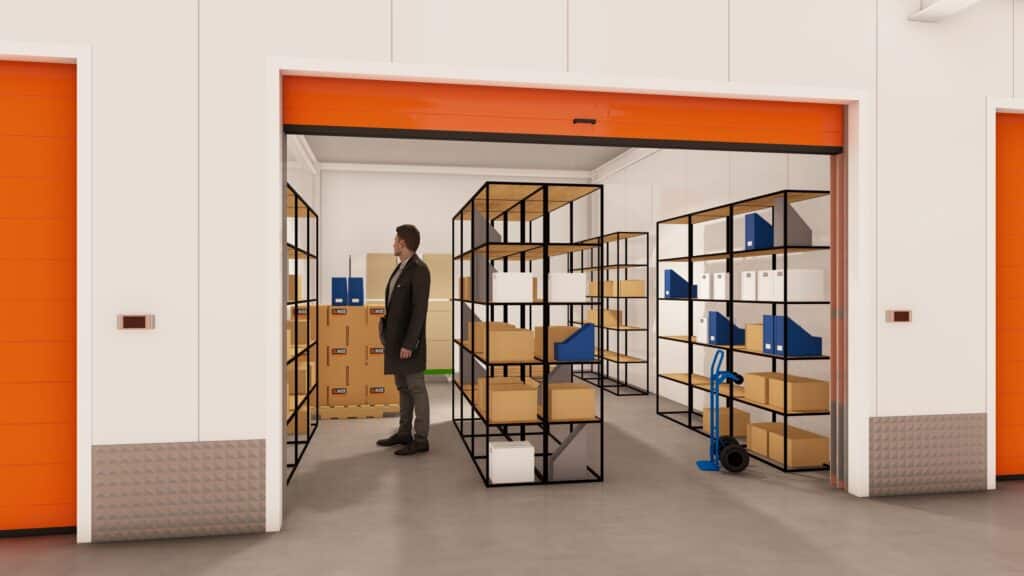
What storage unit costs actually mean for your business
Storage unit costs encompass all expenses incurred for external space to store or use items, inventory, or materials. It is not just about the monthly rate, but also about access, usage restrictions, transport time, security, and flexibility. This is an important definition because many entrepreneurs still judge storage as if every space serves the same purpose.
In practice, there are significant differences between self-storage, a garage box, and a commercial unit. A cheap space outside the city without direct access may seem attractive on paper, but if your staff, van, or schedule suffers delays every week as a result, the real costs are higher. For your business, it is not just what you pay that counts, but primarily what the space makes possible.
That is why storage unit costs say a lot about value. Are you paying for a locked box with limited opening hours, or for a multifunctional space with 24/7 access, excellent accessibility, and room to load, unload, or work? That distinction determines whether storage becomes a brake on your growth or a powerful tool.
Self-storage, garage box, or external storage: where is the real difference?
The most important comparison is this: self-storage is usually intended purely for storage, while a garage box or commercial space is often more versatile. With self-storage, you often rent an indoor space in a building with shared hallways, elevators, or loading times. A garage box is typically directly accessible, more independent in use, and better suited for entrepreneurs who need speed and freedom.
Are you wondering: is self-storage always cheaper? The direct answer is no. The entry price may seem lower, but you often get fewer usage options, less independence, and sometimes less practical accessibility. Especially if you need to access your inventory or work equipment regularly, a garage box can be a much more effective choice.
Other forms of external storage also differ greatly. Think of warehouse space, shared storage, or commercial space in industrial parks. Such solutions can work, but often involve extra agreements, restrictions, or higher fixed costs. A garage box sits right in the middle: compact enough to remain efficient, yet spacious and flexible enough for professional business operations.
If you want to delve deeper into these differences, take a look at the comparison between self-storage and XLBox. There you will clearly see why entrepreneurs are increasingly choosing an alternative that offers more than just storage.
Which factors determine storage unit costs the most?
The price of storage is primarily determined by five factors: location, size, accessibility, security level, and usage possibilities. A space in a well-accessible location is usually more valuable than a cheap solution that results in detour time and logistical delays. Especially for an entrepreneur, accessibility is not a luxury, but essential for a smooth process.
Additionally, access makes a big difference. Do you have fixed opening hours, or can you visit 24/7? If you start early, work late, or need materials unexpectedly, free access provides immediate operational flexibility. You might not see that benefit directly on the invoice, but you will see it in your scheduling, service, and business growth.
Security also plays a major role. Good access control, locked units, and a professional environment are important when working with inventory, tools, or valuable equipment. Secure storage not only prevents risks but also provides peace of mind. Therein lies real value, especially when your business assets directly influence your revenue.
- Size: do not pay for too many empty square feet, but also avoid renting a space that is too small and requires an immediate move.
- Usage: choose a space that offers not just storage, but also supports loading, unloading, and practical use.
- Flexibility: a space that moves with your business is often more attractive in the long run.
When is a garage box more valuable than a standard storage unit?
A garage box becomes more valuable as soon as you need more than just a place to put boxes. Do you use your space for inventory management, tools, seasonal items, samples, or light work preparation? Then you benefit from direct access, multifunctional use, and your own lockable space. That is precisely where a garage box distinguishes itself from standard storage.
A frequently asked question is: when should you prefer to pay a bit more for storage? The answer is simple: as soon as those extra costs lead to more revenue, less wasted time, or better control over your business operations. If you do not want to be dependent on shared hallways, wait times, or limited access, an independent storage solution quickly becomes the better business choice.
Practical example: suppose you run a webshop and currently keep your inventory at home and partly in a rented storage unit. Every delivery requires extra heavy lifting, you cannot always load and unload directly, and during peak times you lose oversight. If you move to a garage box with good accessibility and 24/7 access, you organize your storage more professionally, work faster, and create room for scaling up. The monthly storage unit costs then become an investment in control and growth rather than a burden.
That is why we see a garage box not just as storage, but as your own business space in compact form. For many entrepreneurs, it is a smart intermediate step between working in a space that is too small and immediately renting a large commercial unit.
Cheap storage space or the right storage space: what is the best choice?
The cheapest solution is by no means always the best choice. Low storage unit costs are only interesting if the space also fits your usage. If you have to drive back and forth frequently, cannot visit at your own times, or are only allowed limited use of the space, you ultimately pay elsewhere: in time, frustration, and lost efficiency.
The right storage space supports your way of doing business. Think of a garage box suitable for storage, work equipment, small logistical processes, and a professional appearance. That makes the space not only functional but also sustainably usable. It is precisely that combination of flexibility and practical use that makes the difference between renting out of necessity and choosing with vision.
For entrepreneurs who look further, that choice can even touch upon real estate and wealth building. Because as soon as you think about structural space needs, rent versus buy, stable real estate, and rental opportunities also come into play. Therefore, read more about buying or renting storage space if you want to evaluate your next step more broadly.
How to determine if your storage unit costs are truly proportional
A good rule of thumb is simple: your storage unit costs are healthy if the space allows your business to work faster, more clearly, and more professionally. That means less searching, better protection of your items, more flexibility, and room for growth. Especially with a garage box or commercial unit, the practical value often carries more weight than the lowest rental price.
Therefore, do not just look at square footage, but at daily use. How often do you visit? What do you store? Do you also need to be able to load, unload, or work temporarily? Once you answer those questions honestly, you will more quickly see which solution truly fits your business.
Ultimately, storage unit costs only mean something when you link them to returns in time, convenience, and continuity. For entrepreneurs who want to store securely, work flexibly, and seek space without restrictions, the best choice is rarely the cheapest option, but it is the most valuable one.