



Real estate investing appeals to many novice investors, but the first step often feels larger than necessary. Which form fits your budget, what return is realistic, and how much risk do you really take when you start with real estate?
For those who want to build wealth, it is important to look not only at yield but also at the entry amount, management, rental obligations, and flexibility. In this article, we compare three well-known routes: real estate funds, buying a home for rental, and investing in a garage box. This allows you as an investor to make a balanced choice that fits your goals.
What exactly does real estate investing mean?
Real estate investing means that you invest money in real property with the goal of returns, wealth accumulation, or passive income. That return can come from rental income, appreciation of the property, or a combination of both. The best-known forms are indirect investing through funds and direct investing through ownership of an object.
For an investor, the distinction is essential. With indirect investing, you do not buy a physical building, but a share in a fund that manages real estate. With direct investing, you are the owner of, for example, a home, business unit, or garage box, and you have more influence over rental, costs, and strategy.
The central question is therefore not only what can yield the most, but especially which form of real estate investment fits your risk profile, available starting capital, and desired involvement. Anyone who wants an overview would do well to first clearly compare the differences.
Comparing real estate investing: real estate fund, home, or garage box
The three most popular options differ greatly in accessibility. A real estate fund often requires a lower entry amount and little active management, while a rental property requires a lot of capital and more operational responsibility. A garage box is often practically in between, but for many starting investors, it is a smart and clear alternative.
- Real estate fund: low or medium entry, diversification possible, little direct control, dependent on fund management and market fluctuations.
- Rental property: high entry, financing often required, more regulations, maintenance, and contact with tenants, but direct ownership.
- Garage box: relatively lower entry, direct ownership, straightforward rental, multifunctional use, and often less complex management.
Anyone who approaches real estate investing as a long-term strategy must look beyond just gross return. A home seems attractive due to the size of the rent, but this is often offset by higher costs, more maintenance, and legal obligations. A garage box is smaller, but for that very reason, it is often easier to manage and interesting for diversification within real estate.
What is the biggest difference in practice?
The biggest difference lies in complexity. A real estate fund is more passive, but you have little influence on the underlying real estate. A home provides control but requires a lot of time and capital. A garage box combines direct ownership with relatively simple rental, limited maintenance costs, and multifunctional use as storage space or business space.
How does real estate investing with shares in real estate funds work?
Investing through real estate funds is a logical first introduction to real estate investing for many beginners. You then buy units or shares in a fund that invests in homes, shops, offices, or logistics real estate. The advantage is diversification: you are not dependent on one tenant or one location.
However, this option also has limitations. You do not own a garage box, home, or business unit yourself, but only a financial interest. As a result, you have less control over rental, maintenance, access control, or the choice of a real estate segment that you find attractive.
Is a real estate fund suitable if you primarily want control? The short answer is: no, usually not. This form is better suited for investors who seek convenience and place less value on direct ownership. For those who find tangible real estate important, owning an object often feels more like wealth accumulation.
Real estate investing with a home: attractive, but capital-intensive
Buying a home for rental is a classic form of real estate investing. You receive rental income and potentially benefit from long-term appreciation. This makes homes attractive to investors who think in terms of stable cash flow and long-term ownership.
On the other hand, a home often requires a lot of starting capital. In addition to purchase costs, you have to deal with financing, maintenance, taxes, vacancies, sustainability improvements, and potentially stricter rental regulations. For an exploring investor, this is often the reason not to step directly into residential real estate.
Does a home always yield the highest return? No. The net return depends on the purchase price, financing costs, turnover costs, maintenance, and how easily you find a reliable tenant. In practice, a smaller object with less hassle can sometimes provide a more efficient return.
Why do many beginners experience barriers with homes?
The barrier is usually in debt accumulation and management. If you have to finance heavily, you increase your dependence on interest rates, regulations, and occupancy rates. Furthermore, home rental is rarely completely passive, as tenants, repairs, and contracts require time and attention.
Real estate investing with a garage box and returns
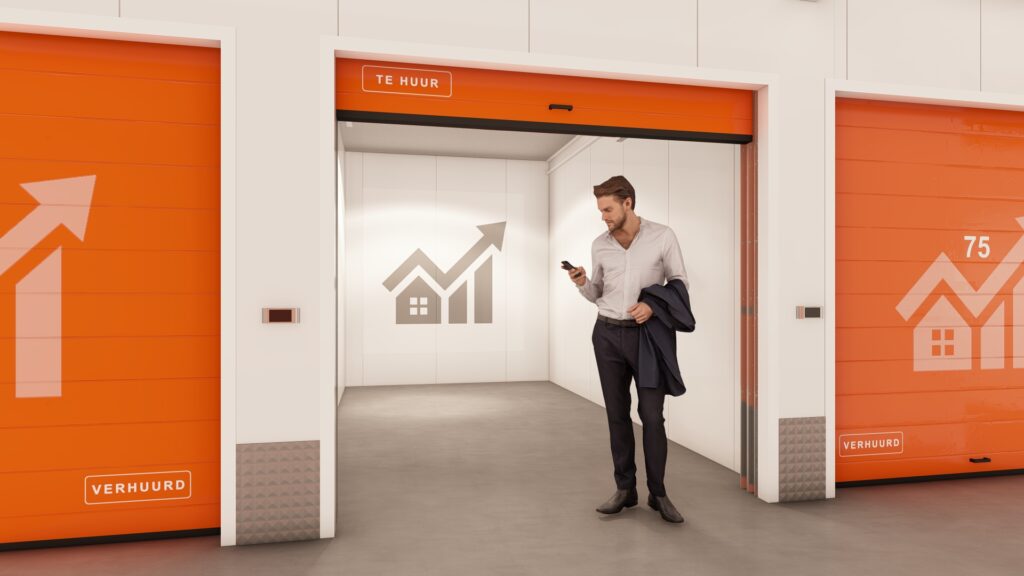
For many novice investors, a garage box is a practical alternative within real estate investing. A garage box is an independent real estate object that you can use for rental as storage, parking, or small-scale business space. As a result, it combines direct ownership with a clearer risk profile than many larger real estate objects.
The return on a garage box usually comes from rental income and the potential value stability of the real estate. Because the object is compact, maintenance and management often remain limited. Especially when a location is easily accessible, offers 24/7 access, and can be used for multiple applications, an attractive rental profile is created.
At XLBox, we see that investors specifically value that combination of flexibility and simplicity. A garage box is not an anonymous remote investment, but tangible real estate with clear utility value. Those who want to delve further into this approach will find more background on the page about investing in real estate.
An additional advantage is the broad target group of tenants. Think of entrepreneurs storing inventory, tradespeople with tools, self-employed individuals with business assets, or private individuals with temporary storage needs. This multifunctional use makes a garage box robust as a real estate investment, precisely because demand does not depend on a single type of use.
Practical example: starting without large debts
Suppose an investor wants to start with real estate but does not want to take out a large loan for a home immediately. Instead, he chooses a garage box in an easily accessible location. He rents the space to an entrepreneur who wants to store inventory and work equipment and values secure storage and flexible access.
In this scenario, the income is clear, management is limited, and the object is multifunctional if the tenant changes. This makes the garage box interesting for those who want to build wealth with tangible real estate without being immediately tied to complex rental obligations. That is precisely where the difference between theoretical return and workable return lies for many investors.
Which type of real estate investing fits your risk profile?
The best choice depends on three questions: how much capital do you have available, how much involvement do you want, and how important is direct ownership to you? A real estate fund fits convenience and diversification. A home fits investors with more budget and a willingness for active management. A garage box often fits those who want to start manageably and still invest in value-stable real estate.
- Low to medium starting capital: a garage box or real estate fund is usually more obvious than a home.
- High need for control: direct ownership of a garage box or home is more logical than a fund.
- Limited time for management: a garage box is often easier to operate than a home.
- Focus on wealth accumulation: tangible real estate with rental options offers more control for many investors.
Anyone weighing options today does not have to start big right away. Especially within real estate investing, a compact object can be a strong first step, provided it is future-proof and aligns with real market demand. Want to read more about this consideration? Then also check out our blog about buying a garage box as an investment.
The conclusion is clear: real estate investing works best when the form fits your goal, not just the theoretical return on paper. For the exploring investor looking for flexibility, rental options, security, and a manageable entry, a garage box is often an effective and future-proof alternative. In this way, real estate becomes not an elusive plan, but a concrete step toward returns and wealth accumulation.